
Future of Gasoline Cars USA in the Electric Era
As electric vehicles gain momentum across the U.S., the future of gasoline cars USA remains a pressing topic for business owners. From fueling infrastructure to long-term demand, understanding where gasoline stands in the electric era is critical for fleets, farms, and gas stations.

Future of Gasoline Cars USA in the Electric Era
The vehicle mobile enterprise is presently processing one of the largest shifts in history. With authorities’ incentives, client interest, and advances in technology, electric-powered automobiles (EVs) are swiftly increasing throughout the U.S. marketplace. Yet, no matter the buzz, gas-powered automobiles continue to be the bulk on American roads, serving industries and groups that call for convenience, reliability, and affordability. Business owners, from fuel-line station operators to agricultural fleet managers, ought to determine this transition method for their operations. The destiny of gas vehicles within the USA will no longer be determined in a single day, but will evolve steadily over decades. While EVs dominate headlines, gas-powered automobiles continue to play a primary position in sectors that can’t rely upon charging networks. For decision-makers, the maximum practical state of affairs isn’t an unexpected phaseout; however, a twin device wherein gas and EVs function via way of means of aspect, each serving specific marketplace demands.
Why Gasoline Still Matters for Business Owners
Gasoline keeps an effective presence as it suits the desires of organizations that require speedy, dependable, and broadly to be had fuel. For fuel-line station owners, the bulk of everyday sales nevertheless comes from conventional fueling. Agricultural organizations anticipate vehicles and devices that can’t take a seat down idle for hours ready to recharge. Government fleets answerable for snow removal, emergency response, or municipal offerings rely upon gas’s immediate refueling capability. While EVs might also lessen protection expenses and emissions, their practicality for high-demand or rural operations remains limited. This makes gas a critical part of commercial enterprise continuity strategies. For commercial enterprise owners, the concern isn’t deciding on one power supply over some other, but making sure their operations continue to be green and profitable. Gasoline affords that truth nowadays and could keep to accomplish that within the close to destiny, making it necessary at the same time as EV adoption quickens in city centers.
Infrastructure Challenges for EV Adoption
The largest impediment to EV adoption lies in infrastructure. For organizations placed in small cities or faraway regions, the closest speedy-charging station can be hours away, making gas-powered automobiles the simplest possible choice. Building national EV infrastructure is a slow, luxurious system requiring cooperation among authorities, application companies, and private investors. Until the charging community turns into as massive as fuel line stations, gas automobiles will retain dominance in large portions of the U.S. For fleet operators, downtime is luxurious, and looking forward to batteries to feel isn’t an option. Gasoline gives brief refueling, helping commercial enterprise operations that rely upon mobility and uptime. The destiny of gas vehicles within the USA is carefully tied to how speedy charging infrastructure develops; however, in the meantime, organizations can’t afford to rely completely on electric alternatives.
Cost Factors: Gasoline vs. Electric Vehicles
When agencies evaluate costs, fuel maintenance offers sturdy advantages. EVs regularly require a bigger upfront investment, with industrial electric vans and vehicles sporting fee tags that reach fleet budgets. While long-term financial savings in gasoline and preservation are appealing, the payback duration can extend over years, an impediment for small agencies or municipalities with confined budgets. Gasoline motors, via way of means of contrast, provide predictable gasoline charges and substantially decrease buy costs. Agricultural fleets, government agencies, and transport offerings regularly want a couple of motors, making affordability a pinnacle concern.
Additionally, EV infrastructure, together with putting in charging stations, provides new charges, whilst fuel refueling remains easy and cost-effective. Business leaders should weigh short-time period economic realities against long-term goals. For many, sticking with fuel-powered motors remains the maximum realistic choice today. This fee stability guarantees fuel maintenance to dominate, at the same time as EVs advantage traction in wealthier or city markets.
Environmental Pressures and Regulatory Changes
Environmental worries are shaping regulations throughout the nation, pushing industries towards purifier energy. Federal and country governments are putting stricter emissions requirements and supplying incentives for EV adoption.For agencies, compliance with emissions policies is critical; however, so is reliability. Fleets can not compromise overall performance whilst meeting assembly sustainability targets. Many corporations are adopting a sluggish technique of introducing EVs into select roles while continuing to depend on fuel, where it makes sense. This balanced direction permits corporations to fulfill regulatory necessities without compromising provider or profitability. The destiny of fuel automobiles in the USA could be fashioned via means of an aggregate of policies and innovations, ensuring that fuel remains a vital fuel for industries that require versatility and resilience.
Gas Stations: Adapting to a Dual-Fuel Market
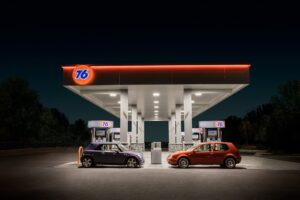
Gas station proprietors face demanding situations and possibilities because the automobile marketplace evolves. On one hand, fuel income stays regular and profitable, ensuring steady sales streams. On the other hand, the purchaser’s hobby in EVs is growing, requiring fuel-line stations to reconsider their function within the fueling ecosystem. Some forward-thinking operators are already putting in EV charging stations along conventional pumps, getting ready for a hybrid fueling destiny. Still, fuel remains the principal motive force of profitability for station proprietors, particularly in groups where EV adoption remains low. The smartest technique for fuel-line station agencies is adaptability, preserving sturdy fuel providers whilst strategically exploring EV charging investments. This guarantees client loyalty and positions agencies to fulfill evolving calls without sacrificing current sales. In the destiny of fuel automobiles USA, fuel line stations that embody flexibility will stay critical providers in each rural and urban areas.
Agriculture and Fleet Operations: Why Gasoline Endures
Agriculture and fleet-heavy industries illustrate why gas cars continue to be indispensable. Farmers depend upon gas-powered vans and devices to function on tight schedules, regularly in faraway regions in which charging stations do now no longer exist. Similarly, creation companies, logistics providers, and municipal fleets require cars that may function across the clock without downtime. While EV generation is advancing, it has now no longer reached the extent in which it could absolutely replace gas in those high-demand scenarios. For authorities’ operations, reliability is non-negotiable: police, fire, and emergency responders have to have cars geared up instantly, now no longer after hours of charging. This makes gas the sensible preference for the foreseeable future. The destiny of gas motors within the USA isn’t always approximately removing gas, but approximately balancing it with electric answers in which they add value. For now, gas remains the spine of industries that can not compromise on uptime, performance, and accessibility.
Looking Ahead: A Balanced Future for Fueling
The U.S. automobile marketplace is heading towards a hybrid destiny as opposed to a complete transition to EVs. Businesses ought to prepare for a dual-strength environment in which gas and power coexist. Gasoline-powered cars will continue to dominate rural and high-call for industries, at the same time as EVs gradually increase in city and consumer-driven markets. For commercial enterprise owners, the concern ought to be flexibility in adopting EVs while they’re cost-effective and sensible, however, preserving gas fleets for reliability. Fuel transport offerings will continue to be crucial for preserving fleets and operations running without disruption. This is where relying on companions matters. Brad Hall Fuel offers reliable gas transport answers tailor-made to commercial enterprise needs, making sure fuel line stations, farms, fleets, and government operations continue to be fueled and equipped in a changing landscape. As the destiny unfolds, Brad Hall Fuel stands as a companion that maintains organizations organized for each gas and electric demand.
Share:
More Posts

Get In Touch
👉 Contact Brad Hall Fuel today to learn how our bulk fuel solutions can power your business—wherever you are.